
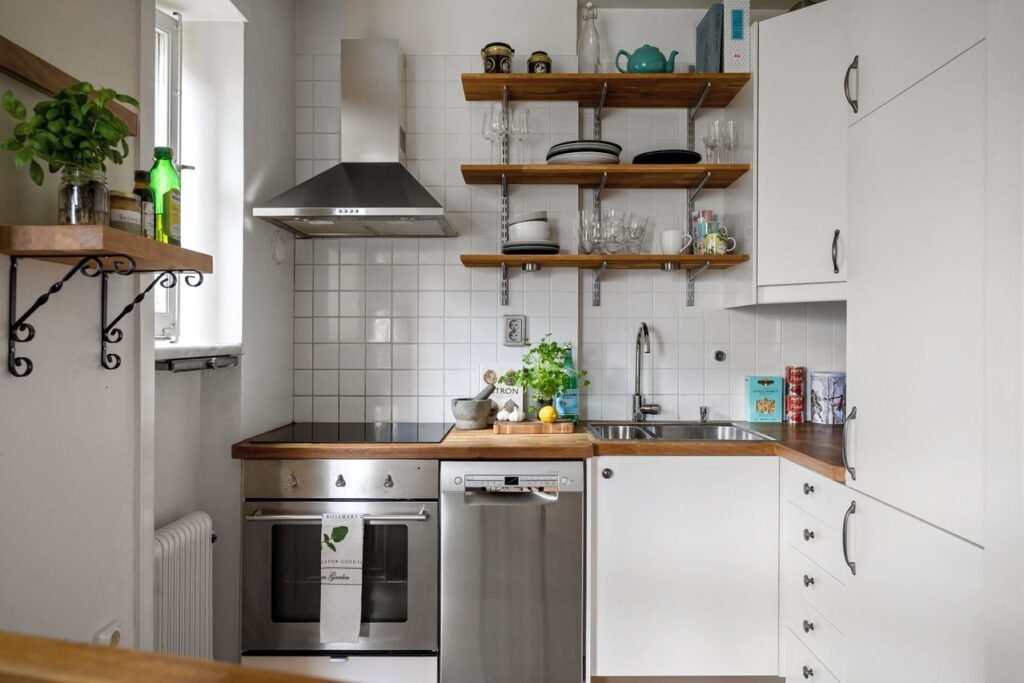
A tidy kitchen can make everyday cooking much easier. When everything has its own place, you spend less time looking for things and more time enjoying your kitchen. However, keeping a kitchen organised can be difficult, especially when cupboards are full, worktops are small and there are many items to store.
The good news is that you do not always need a bigger kitchen to create more storage. A few simple changes can help you make better use of the space you already have. From using the inside of cupboard doors to adding shelves and storage baskets, there are plenty of practical ways to keep your kitchen neat.
If your kitchen often feels crowded or untidy, these simple storage ideas can help you create a cleaner, more organised and easier-to-use space.
Use the Inside of Cupboard Doors
The inside of a cupboard door is often left unused, but it can provide useful extra storage. You can add small racks, hooks or organisers to hold everyday items without taking up shelf space.
Best for: Measuring spoons, kitchen wraps, chopping boards, cleaning cloths and small utensils.
Why it helps: It makes use of an otherwise empty area and keeps frequently used items easy to reach.
Quick tip: Choose a slim organiser so that the cupboard door can still close properly. Avoid placing heavy items on the door, as they can make it difficult to open and close.
Add Extra Shelves Inside Cabinets
Tall kitchen cupboards often have more vertical space than you need. Instead of leaving this space empty, add small shelf risers to create another level for storage.
Best for: Plates, bowls, mugs, tins, jars and small food packets.
Why it helps: Extra shelves make better use of the height inside a cupboard and prevent items from being hidden at the back.
Quick tip: Keep the things you use most often on the lower and easier-to-reach shelves. Less-used items can go higher up.
Make Better Use of Drawer Space
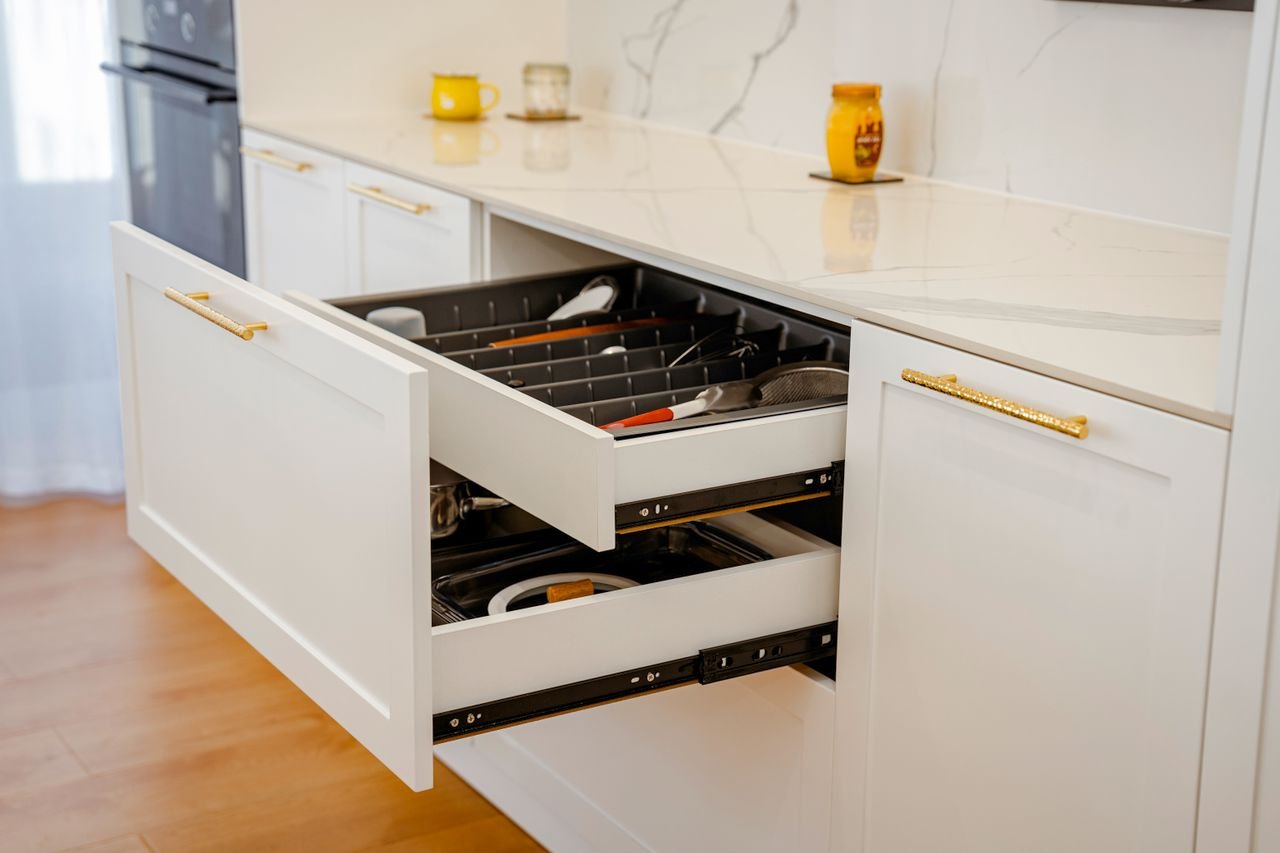
Kitchen drawers can quickly become messy when everything is placed together. A simple drawer organiser or a few dividers can make a big difference.
Best for: Cutlery, peelers, bottle openers, measuring spoons and small cooking tools.
Why it helps: Dividing the drawer into sections stops small items from becoming mixed together and makes them easier to find.
Quick tip: Remove anything broken or rarely used before organising the drawer. This will give you more useful space and make the drawer easier to maintain.
Use Storage Baskets
Storage baskets are a simple way to group similar items together. They are especially useful inside cupboards, on open shelves and in larger kitchen drawers.
Best for: Baking supplies, snacks, breakfast items, sauces and spare kitchen supplies.
Why it helps: Baskets keep similar products together and can make a crowded cupboard look much neater.
Quick tip: Use labels if several baskets contain different types of food. Choose baskets that are easy to lift so you can reach items at the back of the cupboard.
Install Hooks on Empty Walls
If you have an empty wall in your kitchen, consider turning it into useful storage. A few strong hooks can hold mugs, utensils, aprons or kitchen towels.
Best for: Mugs, cooking utensils, aprons, towels and reusable shopping bags.
Why it helps: Wall hooks free up valuable cupboard and drawer space while keeping everyday items within easy reach.
Quick tip: Place hooks close to the area where you use the items. For example, cooking utensils can be kept near the hob, while mugs can be placed close to the coffee or tea area.
Store Pans Vertically
Pans can take up a surprising amount of cupboard space when they are stacked on top of each other. A vertical pan organiser can make the cupboard much easier to use.
Best for: Frying pans, saucepans, baking trays and chopping boards.
Why it helps: You can take out one pan without lifting several others first. This also reduces scratches and keeps the cupboard looking tidy.
Quick tip: Store pan lids separately if possible. A small lid rack can stop them from taking up too much space.
Use Clear Containers for Dry Food
Clear containers can help keep dry food organised while making it easier to see what you have. Flour, rice, pasta, cereal and other cupboard staples can be stored in matching containers.
Best for: Pasta, rice, flour, cereal, sugar, oats and other dry ingredients.
Why it helps: Clear containers make it easy to see when something is running low and can also keep ingredients fresh when they have airtight lids.
Quick tip: Add simple labels to containers so you can quickly find the ingredient you need. Make sure containers are completely dry before filling them.
Create a Small Coffee or Breakfast Station
If your kitchen has enough room, create a small area for breakfast and hot drinks. Keeping everyday morning essentials together can make your routine quicker and more convenient.
Keep together: Tea, coffee, sugar, mugs, cereal and other breakfast essentials.
Why it helps: You do not need to search through different cupboards every morning, and the rest of the kitchen can stay less cluttered.
Quick tip: A small tray, shelf or cupboard is enough to create a simple breakfast station. Keep only the items you use regularly in this area.
Use the Space Under the Sink

The cupboard under the sink is often one of the messiest areas in a kitchen. Cleaning products, cloths, sponges and spare supplies can easily become mixed together.
Best for: Cleaning products, cloths, sponges, bin bags and dishwasher supplies.
Why it helps: Small baskets or stackable organisers can separate different products and make the cupboard easier to manage.
Quick tip: Keep everyday cleaning products at the front and less frequently used supplies towards the back. Leave some space so you can easily check the area and clean it when needed.
Keep Everyday Items Within Easy Reach
One of the simplest ways to organise a kitchen is to store the things you use most often where they are easy to reach. Plates, mugs, cooking utensils and everyday ingredients should not be hidden in difficult-to-access cupboards.
Keep nearby: Plates, mugs, utensils, cooking oils and everyday ingredients.
Store away: Rarely used appliances, special serving dishes and seasonal kitchen items.
Why it helps: Keeping everyday essentials nearby makes cooking and cleaning quicker and reduces unnecessary searching.
FAQs
How can I organise a small kitchen?
Start by making use of unused areas such as cupboard doors, empty walls and vertical cabinet space. Hooks, shelf risers, baskets and drawer organisers can all provide extra storage without taking up much room.
How do I stop my kitchen worktops becoming cluttered?
Try to keep only the items you use every day on the worktop. Store appliances and kitchen tools that are used less often inside cupboards or drawers.
Are storage containers worth using in a kitchen?
Yes. Storage containers can keep dry ingredients fresh, make cupboards look tidier and help you see what you have. Clear containers are particularly useful for everyday ingredients.
What should I remove when organising my kitchen?
Start with items you no longer use, broken utensils, duplicate tools and out-of-date food. Removing unnecessary items will give you more useful storage space.
Conclusion
An organised kitchen does not have to be perfect or expensive. Small changes can make a noticeable difference to how the space looks and feels. Using cupboard doors, adding shelves, organising drawers and making better use of empty walls can give you more storage without changing the whole kitchen.
The key is to give everything a proper place and keep similar items together. Think about how you use your kitchen every day and keep the most useful items within easy reach. With a little regular effort, it will be much easier to keep your kitchen tidy, practical and enjoyable to use.