
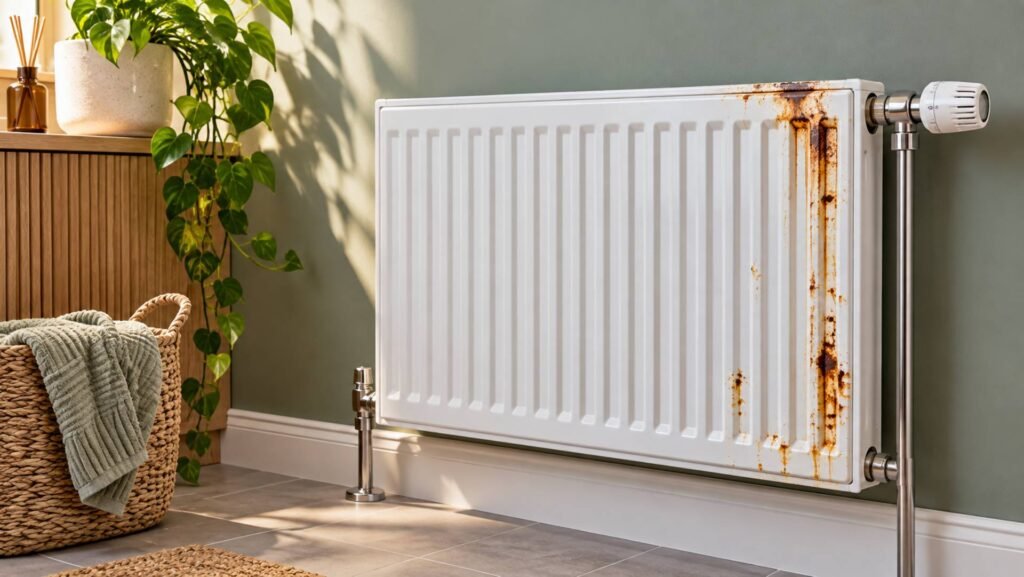
Rust marks on a radiator can start as a small orange or brown spot, but they should not simply be dismissed as an appearance problem. Rust forms when exposed metal comes into contact with moisture and oxygen, so visible marks can indicate damaged paint, damp conditions, a small leak or corrosion that needs attention.
If you notice radiator rusting, checking the affected area early can help you understand whether the problem is limited to the surface or needs further investigation. Small areas of surface corrosion may be manageable, while recurring rust, dampness or deteriorating metal can indicate a problem that requires professional assessment.
What Do Rust Marks on a Radiator Mean?
Most steel radiators have a protective painted or coated surface. This finish helps prevent the metal beneath from being directly exposed to moisture. If the coating becomes scratched, chipped, worn or damaged, water can reach the metal and corrosion may begin.
Rust usually appears as orange-brown spots, streaks or patches. The location can provide useful clues about the possible cause.
A small mark around a scratch may simply indicate that the protective finish has been damaged. Rust around a valve, pipe connection or bleed point deserves closer attention because moisture may be escaping from the heating system. Corrosion along the bottom edge can sometimes be associated with condensation, cleaning water or persistent dampness.
The appearance alone cannot always tell you how serious the problem is. The condition of the metal and whether moisture is present are more important factors.
Why Does Rust Develop on Radiators?
Moisture is the main external cause of radiator corrosion. Bathrooms, utility rooms and other humid spaces can expose radiators to regular condensation. Water may settle on the surface, particularly when the radiator is cool.
Leaks are another possible cause. A valve or pipe connection does not need to produce a large puddle to create problems. A slow seep can repeatedly wet one area, gradually damaging the coating and allowing corrosion to develop.
Physical damage also matters. Furniture, vacuum cleaners, tools or other objects can chip the radiator’s finish. Once bare metal is exposed, even normal household moisture can encourage rust formation.
Corrosion can also occur inside a central heating system. Internal corrosion is different from surface rust and may be associated with the condition of the system water. Appropriate corrosion inhibitor is commonly used in suitable wet central heating systems to help protect internal metal components.
How to Check Rust Marks Safely
Allow the radiator to cool completely before examining it closely. Look at the affected area in good light and check whether the mark is sitting on an otherwise sound painted surface or whether the coating has started to bubble, crack or flake.
Run a dry cloth around nearby valves and pipe connections. If the cloth becomes damp, there may be a small leak that needs investigation. Also look at the wall and floor beneath the radiator for moisture or staining.
Avoid pressing hard against heavily corroded metal. Advanced corrosion can weaken steel, and disturbing a fragile area could make an existing problem worse.
It is also worth checking whether the rust returns after cleaning. Recurring staining usually means the source of moisture has not been resolved.
How to Stop Radiator Rust from Spreading
The right approach depends on the extent of the corrosion and its cause. Treating the visible mark without dealing with moisture will usually provide only a temporary improvement.
Practical steps include:
- Find the moisture source first. Check valves, connections and surrounding surfaces for leaks, condensation or persistent dampness.
- Keep the radiator dry. Wipe away condensation and avoid leaving wet items against painted metal.
- Improve ventilation. In bathrooms and other humid rooms, adequate ventilation helps reduce condensation.
- Clean minor surface rust carefully. Loose corrosion and damaged paint should be removed using a method suitable for the radiator’s material and finish.
- Protect exposed metal. After correct preparation, an appropriate radiator primer and paint can help restore protection to a small damaged area.
- Check the surrounding coating. Bubbling, peeling or widespread deterioration may mean the affected area is larger than the visible rust spot suggests.
- Deal with leaks promptly. Repainting a radiator will not solve corrosion caused by continuing water loss from a valve or connection.
Always follow the instructions provided with any cleaning, preparation or paint product used on a radiator.
When Is Surface Rust Mainly Cosmetic?
A small isolated rust spot caused by a chip or scratch may be mainly a surface issue if the surrounding metal remains solid and completely dry.
In this situation, removing the loose corrosion and restoring the protective finish may prevent further deterioration. Good preparation matters because applying paint directly over active rust can hide rather than resolve the problem.
Continue checking the area afterwards. If rust reappears quickly, spreads beneath the coating or is accompanied by moisture, further investigation is sensible.
When Can Rust Indicate a More Serious Problem?
Widespread corrosion deserves more attention than an isolated surface mark. Deep pitting, extensive flaking or metal that appears noticeably weakened can indicate that corrosion has progressed beyond the protective finish.
Rust near valves and connections should also be treated cautiously, particularly when the area feels damp. A heating engineer can determine whether moisture is coming from a connection, valve, radiator body or another part of the system.
Water appearing through the radiator itself is more concerning. Corrosion can eventually weaken metal enough for small holes to develop. Painting over an area that is already leaking will not restore the strength of the radiator.
Should You Repair or Replace a Rusty Radiator?
Repair can be reasonable when corrosion is genuinely superficial, the metal remains sound and the cause has been corrected. Minor paint damage does not automatically mean that an entire radiator needs replacing.
Replacement may need to be considered when corrosion is extensive, the radiator body is leaking, the metal is badly deteriorated or rust repeatedly returns despite suitable surface treatment.
A qualified heating professional can assess uncertain cases. They can also inspect valves and connections and advise whether the wider heating system needs attention rather than treating the visible rust in isolation.
Preventing Rust from Returning
Regular visual checks make radiator problems easier to identify while they are still small. Pay particular attention to the bottom edge, valves, bleed points and areas where the coating has been damaged.
Keep radiator surfaces reasonably clean and dry, address condensation problems and avoid using cleaning products that could damage the finish. In wet central heating systems, system-water condition and inhibitor levels should also be maintained according to appropriate professional and manufacturer guidance.
Final Thoughts
Rust marks are usually a sign that moisture has reached exposed metal, but the cause can range from a simple paint chip to condensation, a leaking connection or more advanced corrosion. Checking where the rust has formed, whether the area is wet and how sound the surrounding metal remains will help determine what action is appropriate.
Small surface marks can often be dealt with before they spread, provided the source of moisture is corrected and the metal is properly protected afterwards. If corrosion is extensive, keeps returning or is accompanied by leaking or weakened metal, arrange for the radiator and heating system to be professionally checked rather than relying on a cosmetic repair.