
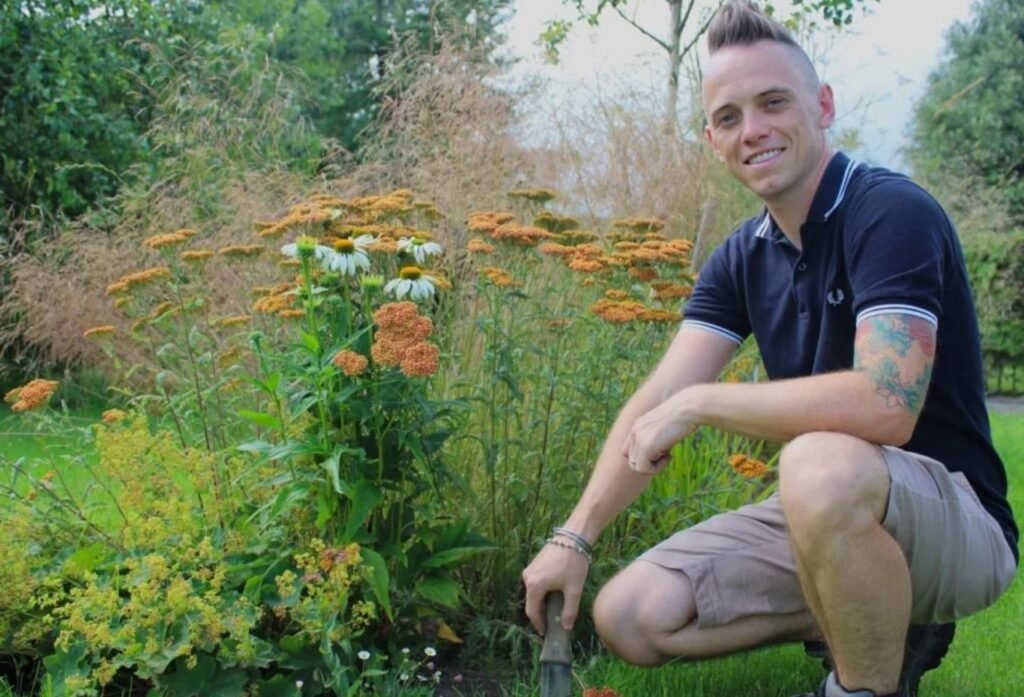
Lee Burkhill didn’t become a well-known TV figure waiting for the right camera when he started gardening in Britain. Because he studied soil, did design work, taught online, and knew a lot about how lost many people feel in their own gardens, he built his reputation. He is better known as “Garden Ninja” and is now one of the more friendly gardeners in the UK, especially for people who saw him on BBC One’s “Garden Rescue.” He changed careers, but his story is also about how he turned a private love of plants into a public goal to make gardening less scary.
Burkhill is appealing because he is both technically knowledgeable and sure of himself when he talks to regular people. He can talk about the structure of plants, their value to wildlife, the changing of the seasons, and garden planning without making it sound hard for people who are just starting out. In a field that has tended toward the traditional, his look, voice, and way of teaching make him stand out. But his work is based on real-world experience. Many viewers see him as a new type of garden expert: trained, media-savvy, direct, open, and surprisingly honest about the work that good gardens need.
What is Lee Burkhill?
Lee Burkhill is a British garden designer, horticultural instructor, TV host, author, speaker, and person who makes things online. His design business, blog, YouTube channel, courses, and public gardening advice are all under the name Garden Ninja, which is what he is best known for. He is best known to TV viewers as one of the designers on BBC One’s Garden Rescue, where he helps people all over the UK make their gardens look better. His public image is somewhere between professional garden design and easy-to-understand education. This is why people who watch his TV shows and people who need real gardening help both search for his name.
Records kept by the government and his own work show that he was born in February 1983. He is part of a group of garden communicators who didn’t grow up with social media but built their careers in the age of blogs, YouTube, streaming clips, and interacting directly with their audience. Garden Ninja Garden Design serves clients in Manchester, Liverpool, Southport, Cheshire, and other nearby areas from its base in the North West of England. His work is now seen all over the country, but his job still feels like a small business that grew through skill, persistence, and media attention.
Burkhill is also one of the most well-known LGBTQ+ people in British mainstream gardening TV. He has talked about his husband in public and how close friends and family help him deal with his type 1 diabetes. Part of the reason for a careful image is that he doesn’t let everyone into every part of his private life. The picture that has been confirmed is of a married designer who doesn’t talk much about his family but uses his platform to talk freely about gardening, health, inclusion, and being strong.
Life in the past and my first love of gardening
Burkhill has said that gardening was something that interested him since he was young, long before it became a job. A lot of people think that his interest comes from growing things by hand in gardens and allotments as a child. He has talked about how his grandfather shaped him and how he learned about veggies, flowers, and the rhythms of farming from him. This early link is important because it shows why gardening is more than just work for him. It’s a place where he feels safe and in charge.
Burkhill has said that he was bullied as a youth and that gardening became a safe place for him. That little thing gives his later teaching style emotional weight, since he often talks to people who are confused, left out, or overloaded. For him, the garden wasn’t just a pretty sight; it was a place where he could concentrate, learn, and gain confidence without worrying about what other people would think. That helps explain why a lot of the time, when he gives advice to the public, it’s against snobbery.
The public doesn’t know much about his parents, siblings, childhood home, or specific schools. People shouldn’t have to guess about that because Burkhill has chosen to keep a lot of his early family life out of the public eye. From what he has said in public, it is clear that gardening wasn’t his first job goal, but rather a hobby. It stayed with him through childhood and adulthood until he finally made it the most important thing in his work life.
How to get into horticulture: education, training, and the path
It wasn’t his first job that Burkhill did as a full-time gardener. He worked in IT for about 12 years, doing things like project management, before Garden Ninja became his job. Even though that job seems very different from borders, soil, planting plans, and garden makeovers, it taught him skills that he still uses in his design work. Garden projects need to be planned out, done in a certain order, within a budget, with the ability to solve problems and keep going even when things change.
Growing plants in school helped him organise the information he had learned from gardening by hand for years. People have said that he is qualified by the RHS, and his work biography links his study to formal horticultural education. As one of the most well-known gardening groups in Britain, the Royal Horticultural Society, his training helps show that his advice is more than just enthusiastic. Not only did he market himself as a yard expert, he also took the time to learn how to do it.
It took some time to switch from IT to garden design. Burkhill talked about a time when he was stressed out and unhappy before he decided to change his path, with his husband’s support. He worked on his skills, helped others, practiced, competed, started a business, and slowly moved into the job for which he is now famous. Many people can relate to the struggle between a stable job and a more meaningful calling, which makes that part of his story more interesting.
Garden Ninja: Making It
It started out as a name for Burkhill’s garden planning work, but it has since grown into a platform for teaching more than just gardening. The name is easy to remember, casual, and a little naughty, which fits his personality. It makes you think of action instead of formality, which has helped him reach gardeners who might not have been able to connect with traditional design language otherwise. But there is a real design business and a serious body of educational work behind the funny name.
When Garden Ninja Limited was officially set up in July 2015, it was a big step forward for Burkhill’s career. After that, the brand grew through garden consultations, design services, online guides, videos, classes, public speaking, and appearances in the media. The company helps people with gardens that are common in the UK, like those with small plots, patios that aren’t used, new lawns, worn-out borders, odd shapes, bad soil, and budgets that aren’t clear. The brand has stayed relatable in large part because it focuses on useful things.
The Garden Ninja website turned into one of Burkhill’s main places to post. It has guides on how to create a garden, prune trees, plant flowers, garden for wildlife, take care of your lawn, do seasonal tasks, and avoid making common mistakes. His YouTube channel added a more visual element, so people could see how to do things instead of just reading instructions. Both the blog and the videos he made helped build trust before and after he started working on TV.
What Made It Happen: RHS and BBC Recognition
In 2016, when Burkhill won the RHS and BBC Feel Good Gardens competition, it was a big step forward. His plan, “Fancy a brew? “Take a Pew” was based on a front yard idea that came from Manchester. People who entered the competition had to think of gardens that could make people happier and bring people together. Burkhill’s winning entry got him important national attention. It also showed that he knew how small rooms in a house could have social and emotional value.
That award was important because it put him in the esteemed company of RHS events and BBC gardening news. It helped him go from being a promising designer with a new brand to being known by important gardening organisations. For a new yard designer, that kind of approval can help them get jobs that regular ads can’t. It makes customers, editors, producers, and viewers want to pay attention.
Later, Burkhill built on that fame by doing work on shows and getting interviews with the media. The planting and design work he did for Hartley Botanic at the RHS Chelsea Flower Show in 2018 got him more paid work. Chelsea is one of the most closely watched shows in British gardening, and being recognised there has a lot of weight in the business. It helped Burkhill be sure that Garden Ninja wasn’t just an online persona but a real design company that could meet high standards.
Standing in Chelsea, Hampton Court, and Industry
The RHS show world is hard because it requires months of planning and designing to be squished into a small space that only needs to look complete for a short time. Plants need to be timed, placed, and shown in a way that makes sense. In a normal yard, it can take years to get to this point. Fans aren’t the only ones who judge designers; their peers, sponsors, horticultural experts, and experienced gardeners also do. Because of his show work, Burkhill was part of that high-pressure tradition.
Hartley Botanic’s RHS Chelsea Flower Show trade stand got a lot of attention from people, including top-level judging success, because of his work on it in 2018. The project showed that he could work within a brand brief instead of just meeting the needs of domestic clients when it came to heritage greenhouse design, planting, and presentation. That kind of work isn’t like designing a family garden because thousands of people will see the end result right away. It also needs to be able to handle being closely watched by people who know a lot about plants.
These important events made him become known as a designer and communicator. Burkhill’s reputation didn’t come from a single TV audition or video that went viral. It happened over time in smaller, more manageable steps, like years of gardening, official study, starting a business, winning a competition, getting noticed on a talk show, teaching online, and working on TV and radio. One reason his advice often feels real instead of fake is that it builds up slowly.
This is Lee Burkhill on Garden Rescue.
Lee Burkhill became well-known to many people through BBC One’s Garden Rescue. The format of the show is simple but effective: homeowners say what they want and how much money they have, designers come up with different ideas, and the winning plan is put into action to change the garden. After the Rich Brothers left, Burkhill joined the show later on and became part of a group of hosts known for that time. His appearance added a unique mix of confidence, humour, colour, and technical information.
The show is good for him because it’s about real grounds instead of fantasy estates. People who own homes want peace, room for their kids, places to sit, easier upkeep, more wildlife, better landscaping, or a stronger sense of who they are. It is Burkhill’s job to turn those wishes into design options that can be built within the constraints of time, money, and space. There, his schooling in both project management and design comes together in a very clear way.
Garden makeovers on TV can sometimes give viewers false ideas about how fast and cheap the work will be. Some of that process has become less mysterious thanks to Burkhill’s explanations of how applications, surveys, design briefs, filming needs, and build dates all work together. He has written about what goes on behind the scenes in a way that shows how much work goes into planning a reveal. Being honest makes his public image stronger because it treats people as smart instead of just asking them to admire the end result.
Design ideas and gardening style
Burkhill’s design theory is useful, based on plants, and very educational. He talks a lot about how a garden should work for the person who owns it, not just like a picture. A good garden needs shape, movement, balance, seasonal changes, and upkeep that fits the wants of the owner. He also says that knowing a lot about plants is very important because hard landscaping alone can’t make a yard alive.
In his work, he often chooses simple design principles over hard-to-understand rules. People learn from him to think about things like sightlines, focal points, texture, height, wildlife value, and how places connect to each other. He also tells gardeners to learn about soil, light, water, and aspect before they buy plants that might not do well. One of his things that makes him good at communicating is that he makes design seem like a set of choices instead of a skill that only professionals have.
A lot of the time, he also talks about sustainability and wildlife worth. It’s now common for garden designers like Burkhill to be judged on more than just how pretty their designs are. They are also judged on how well they support wildlife, water flow, shade, and the health of the ecosystem. He has pushed people to plant things that are good for bugs, birds, and seasonal life while still leaving spaces that people can use. That balance is important because most people who garden at home want it to be both fun and useful.
My husband, my marriage, and my private life
Burkhill has talked about having a husband in public, but he doesn’t talk much about his marriage. He has talked about how helpful his husband was in interviews and personal writing, especially when he changed careers and dealt with type 1 diabetes. That information available to the public shows that he is married, but it’s not enough to make people guess about his husband’s name, job, or family history in general. That line should be respected by a responsible biography.
His willingness to be open about being gay in popular gardening media is more than just a fact. Broad audiences have liked gardening TV for a long time, but its public faces have often shown a narrow view of British family life. Burkhill’s fame helps to make that picture bigger without making his personality a show. He starts out looking like a good designer and host, but he’s also open enough for people to see more of who he is.
The public doesn’t have any solid proof that Burkhill has kids. Some internet biography pages might try to answer that question, but people searching for personal family information shouldn’t make them up. We know for sure that he has decided to keep a lot of his personal life private while making his gardening, health advocacy, and professional work public. That mix is common among people in the media who are well-known enough to be recognised but don’t want to be famous just for the sake of being famous.
Being a person with Type 1 Diabetes
Burkhill has been open about having type 1 diabetes and being diagnosed when she was 16. His public report through Diabetes UK shows how hard it is to deal with his condition while going to school, hanging out with friends, working, and doing physically demanding gardening days. He has talked about how technology and keeping track of carbs have made control easier than it used to be. He has also made it clear that being outside for a long time can make it harder to control blood sugar.
One of the most important parts of his public life is that campaign. It shows a working adult dealing with a serious condition that will last a lifetime while making movies, designing, travelling, planting, and talking to people. For people with type 1 diabetes, seeing that can be comforting because it makes the situation seem manageable without making it look easy. For people who don’t have diabetes, it gives them a better idea of how to plan for a busy work life.
People often say that gardening is soothing, and Burkhill’s story adds to that idea by being realistic. Focus, exercise, and fresh air can all be good for your mental health, but people with diabetes still need to plan their meals, take their medications, be watched, and get enough rest. Burkhill says to keep snacks close while gardening because the time goes by quickly outside. That little thing says a lot about his style: it’s useful, personal, and sensible.
How the public sees him and why they like him
The way people see Burkhill is based on difference. He knows a lot but isn’t stuffy, is sure of himself but isn’t cold, and looks unique without looking like a figure made for TV. His role as the Garden Ninja makes him recognisable, but most of the time, his gardening help is based on real problems people are having. That makes it simple to remember and believe in him.
People also connect with how warm he is. When newbies talk to him, he doesn’t make them feel like they’ve failed; he sees confusion as a normal place to start. In gardening, that’s important because a lot of people get outdoor spaces that they don’t know how to take care of and feel bad when plants keep dying. They know from Burkhill’s work that gardens can be learned, fixed, and made better by making slow choices.
The fact that he has moved jobs in the past makes that connection even stronger. People don’t see him as someone who just walked into their natural place. He switched careers from IT to horticulture after studying and being interested in it for a long time. That change gives his life a more human shape and makes his success feel like it was won.
Money, business, and an estimate of your net worth
Lee Burkhill’s money seems to come from a number of different jobs. Some of these are garden design work, consultations, online courses, writing, speaking, working with brands, making YouTube videos, and hosting TV shows. The media name “Garden Ninja” is not just a name for a business; the company offers paid consultations and educational goods. This is a usual mix for experts today who work with both clients and digital audiences.
The people doesn’t have a good idea of how much money Burkhill has. Estimates may be on some websites, but they are usually not backed up by sources and should not be taken as facts. He has built a diverse professional life so that he doesn’t have to rely on just one source of income. His business value comes from his design skills, the trust of his fans, his reputation in the media, and the Garden Ninja brand.
The money side of his job is different from the money side of being a celebrity. Garden design can require a lot of skill and is in high demand, but it costs money to journey, buy tools and software, hire staff or contractors, film time, get insurance, run the business, and market your services. Being on TV can make a designer more well-known, but it doesn’t always lead to the kind of money that entertainment websites think it does. If you have a serious profile, you shouldn’t act like you have a confirmed fortune when there isn’t one.
Recent Work and Where Things Stand Now
Lee Burkhill is still working as Garden Ninja and is still connected with Garden Rescue. His website and public channels still have videos, courses, consultations, gardening tips, and work for the media. He also gives talks about how to build, plant, and make gardens better in real life. The best way to describe his present job is as a mix of teaching, design, advocacy, and broadcasting.
His online presence is very important because it lets him reach people who don’t watch TV during certain times. If someone sees him on the BBC and then needs help with a real garden problem, they can find his pruning guides, design courses, YouTube lessons, or blog posts. Part of the reason his brand works is that it leads people from fun to action. After the show is over, he gives people something to do.
The world of gardening as a whole has changed in ways that work well for him. More people want gardens that are good for wildlife, plants that don’t need as much care, designs that work with smaller spaces, and advice that doesn’t assume they have a lot of money or a big garden. Burkhill fits right in with this change because he focuses on useful design and easy-to-understand teaching. His writing seems up-to-date because it’s about fields that a lot of people have.
Not so well-known facts that shape his story
The way Burkhill talks about trust is one of the most telling parts of his story. He doesn’t just tell people to buy better plants or make gardens like the ones designers make. He helps them understand why a plant should be in a certain spot and not another, why a path should go in a certain direction, and why a border needs shape before colour. Gardeners can feel good about their choices when they use that method.
His interest in keeping bees is another important fact. People have said that he keeps bees, which makes sense given that he is also interested in wildlife and ecological farming. To keep bees, you need to be patient, pay attention, know the seasons, and accept systems that are bigger than the person managing them. Those traits are also important for good gardening.
His story also shows how powerful self-publishing can be today. Before YouTube and social media, a garden designer might have needed a newspaper piece, a book deal, or a TV contract to get a lot of attention. Burkhill put together a following through his own website and videos. Before popular radio and TV helped him reach more people, his voice was shaped by his independence.
Questions People Ask Often
What does Lee Burkhill stand for?
Lee Burkhill is a famous British garden planner and TV host who goes by the name “Garden Ninja.” The show Garden Rescue on BBC One, where he helps homeowners redesign their gardens, is what most people know him for. He is known for online gardening advice, garden planning services, courses, and hands-on teaching when he’s not on TV.
How old is Lee Burkhill?
According to public company records, Lee Burkhill was born in February 1983. In 2026, that makes him 43 years old. Many trustworthy public sources don’t agree on his exact birthday, so more specific claims should be taken with a grain of salt.
Does Lee Burkhill have a wife?
Yes, Lee Burkhill has talked about having a husband in public. He has talked about how his husband helped him when he changed careers and when he was taking care of his type 1 diabetes. The specifics of his marriage are kept secret, and there isn’t a lot of confirmed public information about his husband.
Does Lee Burkhill have kids?
The public doesn’t have any solid proof that Lee Burkhill has kids. Some history sites might make guesses about private family matters, but you shouldn’t believe them unless you can see where they came from. Burkhill seems to keep his personal life separate from his work as a public gardener.
Before he became Garden Ninja, what did Lee Burkhill do?
Lee Burkhill worked as an IT and project manager for about 12 years before becoming a full-time garden designer. He later retrained and built up his job in gardening by studying, volunteering, doing design work, and doing well in competitions. That work experience probably helped him with the planning and organising of yard projects.
Does Lee Burkhill have diabetes type 1?
Yes, Lee Burkhill has said in public that he has type 1 diabetes and was told he had it when he was a teenager. He has talked about how he deals with the condition while gardening, filming, travelling, and working outside for long periods of time. His comments have helped more people understand how important it is to plan ahead if you have type 1 diabetes and want to stay active.
How is Lee Burkhill right now?
Lee Burkhill is still working as a designer, teacher, speaker, content maker, and TV host through Garden Ninja. He is still involved with Garden Rescue and keeps posting useful gardening tips online. Right now, he is working on a project that combines public attention with direct teaching and design services.
In conclusion
Lee Burkhill’s career shows that becoming an expert in public matters doesn’t happen overnight. He became successful by being interested as a child, being strong, going to school, taking risks in business, getting noticed in the show garden, teaching online, and working on TV. The Garden Ninja brand is stronger because it has a history behind it, not just a catchy name. It comes from years of studying how plants work and how people learn.
Not just the fact that Burkhill knows plants makes him stand out. And a lot of people in gardening do. His skill is being able to talk about gardens in a way that makes people feel strong instead of bad. In a place where a lot of people have outdoor space but don’t know what to do with it, that is a useful skill.
His biography also has a more subtle lesson about starting over. He quit his job in IT to work in the artistic field, where it was hard, built a successful business, and became a well-known face on national TV. He did this while being honest about his health, who he was, and the real work that goes into building confidence.
Lee Burkhill has now made a name for himself in the British gardening press. He designs, teaches, gives talks, and fights for gardens that are both beautiful and easy to make. People who look up his name will remember one thing: Garden Ninja is not just a character; it’s the public face of a man who turned a lifelong hobby into a useful and kind job.